


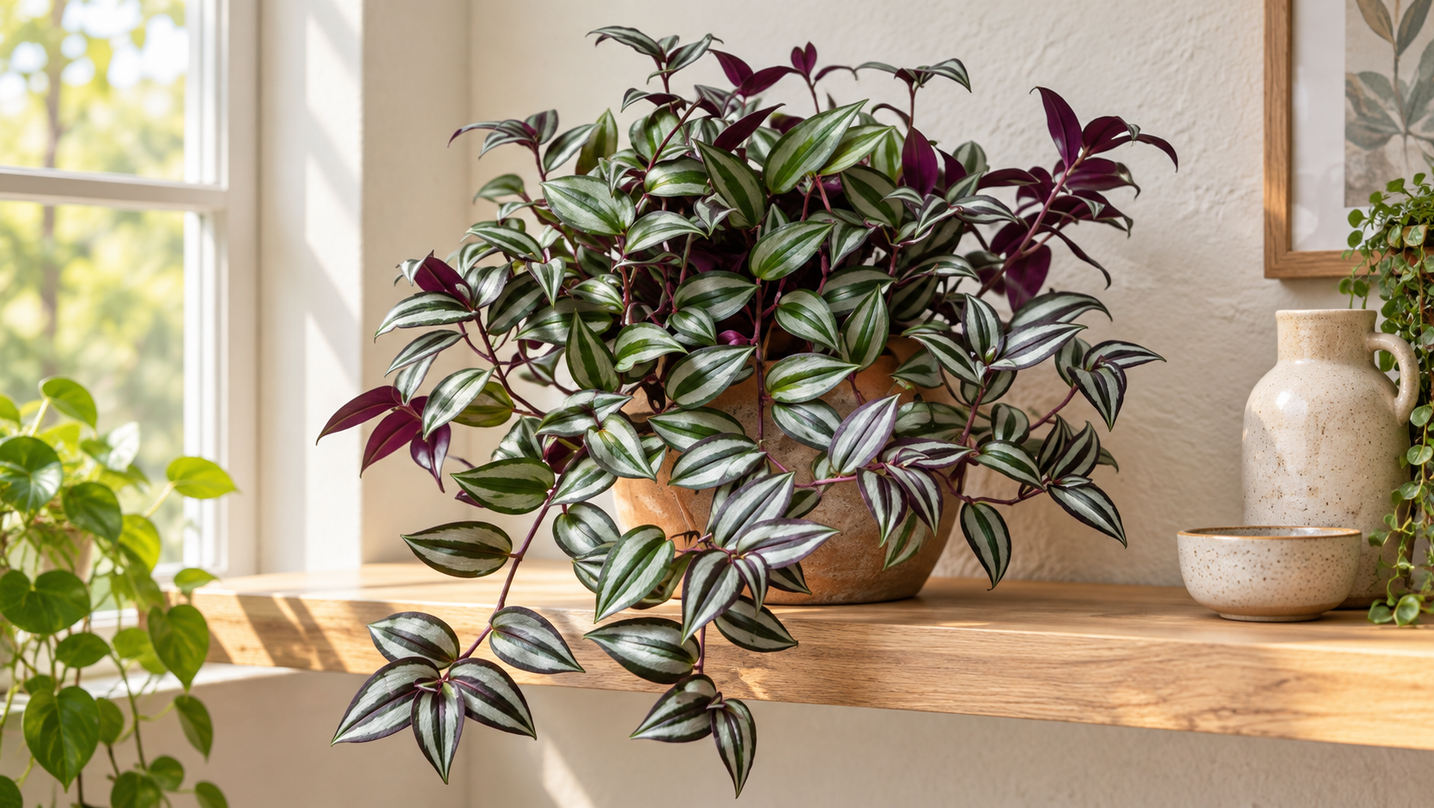
TRADESCANTIA ZEBRINA - WANDERING JEW
LIGHT
- It doesn't like direct afternoon sun; its leaves will scorch. A window sill with good sun can work. It's not ideal, but if conditions require it, it can live in a shaded area that receives sun for part of the day.
- "I don't like direct sunlight, but I love plenty of light, understand?"
WATERING & HUMIDITY
- When we say it loves water, we often interpret it as needing frequent watering. That's not the case. Here's the thing: It loves humidity, but it hates overly wet soil. The soil shouldn't get too dry, but you need to allow it to dry out slightly. For example, in summer, water thoroughly once a week, allowing water to drain from the bottom, and don't leave water in the saucer. In winter, water less frequently.
- Be careful not to get water on the leaves when watering!
- Its roots can rot very quickly, so watering is important.
ROOTING
- In spring and summer, cut a 5-10 cm branch, remove the bottom leaves, and plant it in moist soil or root it in a PLOT Rooting Station. Make many cuttings so some will take. GIt needs to be by a sunny window. Once the roots in water are 5-6 cm long, you can plant it in soil.
- If rooting in moist soil, it should remain in the shade until it takes root.
SOIL
- Because its roots can rot very easily, it needs well-draining succulent soil. PLOT Succulent Soil will create an ideal growing environment for the wandering jew.
NUTRIENTS
- Standard soil is sufficient; no excessive detail is needed.
- In summer, you can feed it every 3-4 weeks with PLOT Succulent Food.
KEEP IN MIND
- In summer, it likes plenty of water (not frequently), good light (not direct sunlight), and humidity. In winter, it doesn't do well with extreme cold or excessive heat from indoor heating.
- It flourishes in spring and summer, but in winter, it needs to be pruned near the roots to survive the winter.
- Don't be sad thinking "I did everything right, why did it die?" Their average lifespan is 3 years. So, it's best to root new cuttings repeatedly and rejuvenate it before it reaches its final stage.
- It can survive without repotting, but you can move it to a pot one size larger each year.
- It flowers whenever it feels like it.
- If you can't bring yourself to prune regularly, its branches will start to grow longer than its leaves, so regular pruning is necessary. Snip off weak leaves.
Q & A
- It's growing downwards but not producing new shoots:
- It's likely in too much shade; move it to a brighter spot.
- It branched out a lot in winter, but its leaves decreased:
- This usually happens in winter due to indoor heating, meaning it needs humidity. You can remedy this by placing a tray with pebbles and water underneath.
- Its color has dulled and faded:
- It's either getting too much direct sunlight or not enough light. Change its location.
- Oh no, mealybugs!!:
- Spray PLOT Leaf Cleaner on the leaves, undersides of leaves, and soil every 3-4 days. .
- Its leaves have decreased significantly:
- Prune from where you want more leaves to emerge; new leaves will grow from where you remove them. Of course, prune the weak, lifeless leaves, not the healthy ones.
- The leaves have turned very dark green:
- This means its energy has decreased, and it's trying to conserve energy. Immediately prune the green leaves. After pruning the green leaves, move it to a place with better light.
- Its colors have faded completely:
- Cold weather and chemical fertilizers can cause its colors to fade.
- What happens if my cat/dog eats its leaves?:
- We can say it's moderately toxic. If your cat or dog eats its leaves, it can sometimes cause skin irritation. Still, be careful and observe them.