


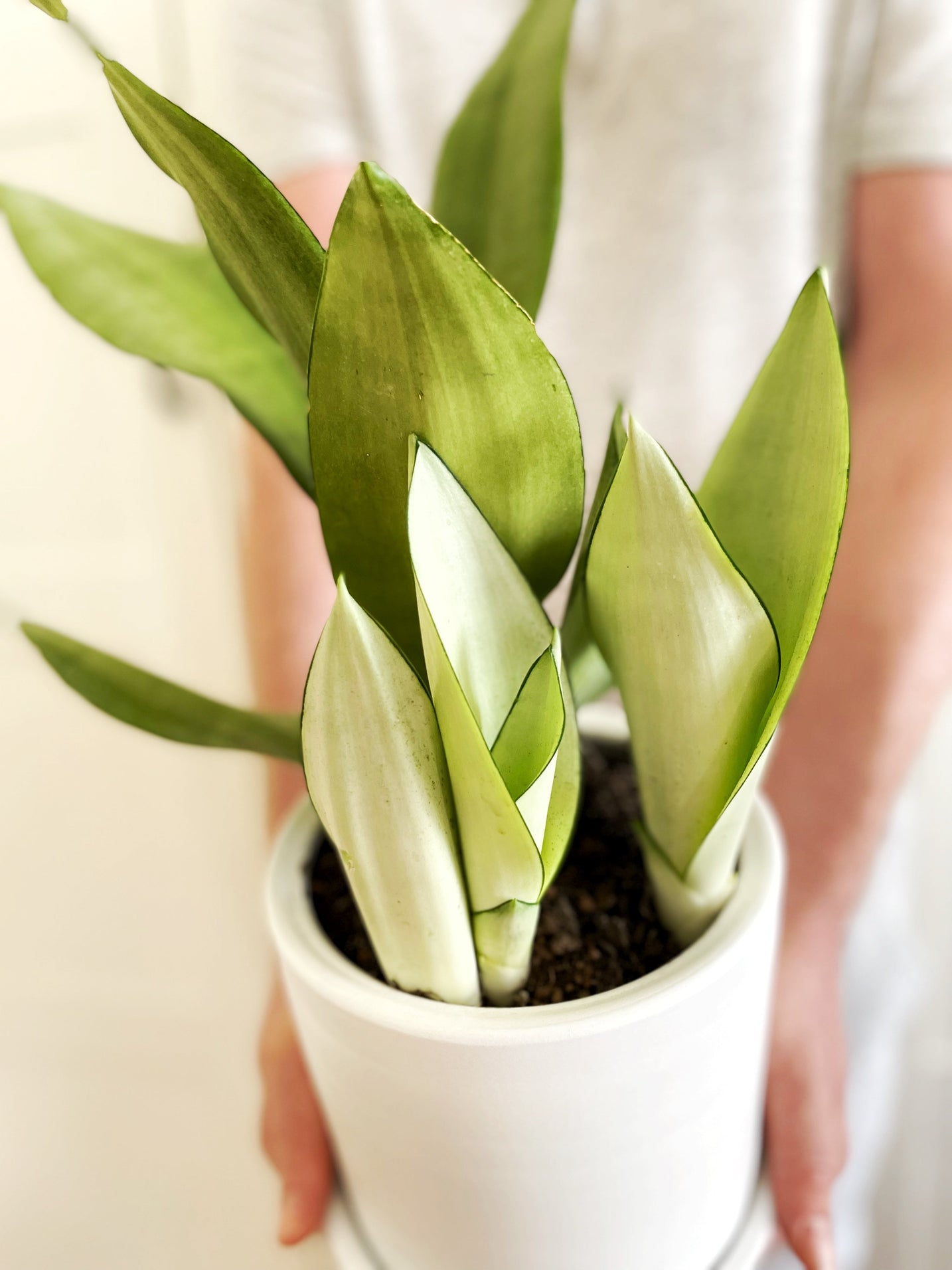
Sanseveria Moonshine
LIGHT
It loves good, filtered light. If it receives too little light, its leaves will start to turn a darker green. Being a hardy plant, it can tolerate both direct sunlight and low light.
WATERING
When to water: It's not accurate to give a specific watering schedule for plants, as it can change constantly depending on the environment. Therefore, wait for the soil to dry out between two waterings. If you're unsure when to water, stick one of the wooden skewers into the soil; if there's wet/damp soil residue on the stick when you pull it out, it's not yet time to water. If the stick comes out dry, you can water it.
How to water:
Slowly and thoroughly water the surface of the soil until water drains out of the pot's drainage hole. Remember, the main rule for this plant is: water rarely but abundantly. Wait 10-15 minutes for the water to drain. Always empty any water that collects in the saucer. Use purified water or water that has been left to sit in an open container for 24 hours for watering.
SOIL / REPOTTING
- For example, at Plant Lovers of Turkey stores, we sell plants in soil specific to that plant. Unless otherwise stated, change the plant's soil to a good soil mix 3-5 days after purchasing it. You can do this every season.
- PLOT Succulent Potting Mix is ideal for this plant.
- Repotting can be done every 2-3 years. Repotting means moving the plant to a larger pot. The ideal season for this is early spring. If your plant's roots haven't coiled around the pot, it means it's not yet time to move it to a larger pot. In years when you don't repot, you should completely refresh the soil or remove the surface soil and add new soil.
NUTRIENTS
You don't need to fertilize very often. During the active growing period (spring-summer, and in some climates +autumn), you can give organic nutrients once a month. PLOT Cactus Succulent Food is the ideal nutrient for Sansevieria Moonshine; it's a natural and powerful nutrient source. It contains all the necessary nutrients for your Sansevieria to thrive. Thanks to its organic matter and microorganisms, it strengthens the plant's root system and the biological structure of the soil, increasing its resistance to diseases.
TEMPERATURE
It doesn't like cold; it thrives in warm environments.
PROPAGATION
-
- Leaf propagation: Cut a healthy leaf from the base, then divide this leaf into pieces at least 5-6 cm wide. Remember which end of the cut pieces is the bottom and which is the top, as this is important because you'll need to plant the bottom part in the soil. Plant the cut pieces into a small pot, with 1.5 cm going into moist soil (you can wait a few hours for them to dry beforehand). Place in a warm environment with good light and water just enough to keep the soil moist.
- Rhizome division: If it's a very young plant, don't separate it immediately, but if it's a mature plant, you can take it out of the pot, separate the offsets, and plant them in another pot.
KEEP IN MIND
- It grows slowly but is a hardy plant.
- The ideal is good and filtered light, but you can also care for it in direct sunlight. If your plant has been in low light, don't suddenly move it to a place with direct sunlight; gradually increase the light intensity, slowly acclimating it to the sun, otherwise, the leaves may burn.
PROBLEMS-SOLUTIONS
- Mealybugs – spider mites: It's a hardy plant and not among the favorite hosts for plant pests. If you encounter mealybugs or spider mites, spray the leaves, undersides of the leaves, and soil with organic PLOT Leaf Cleaner every 3-5 days for 1 month.
- Leaves turning green: If there's insufficient light, the leaves will start to darken. You can move it to a place with better light.